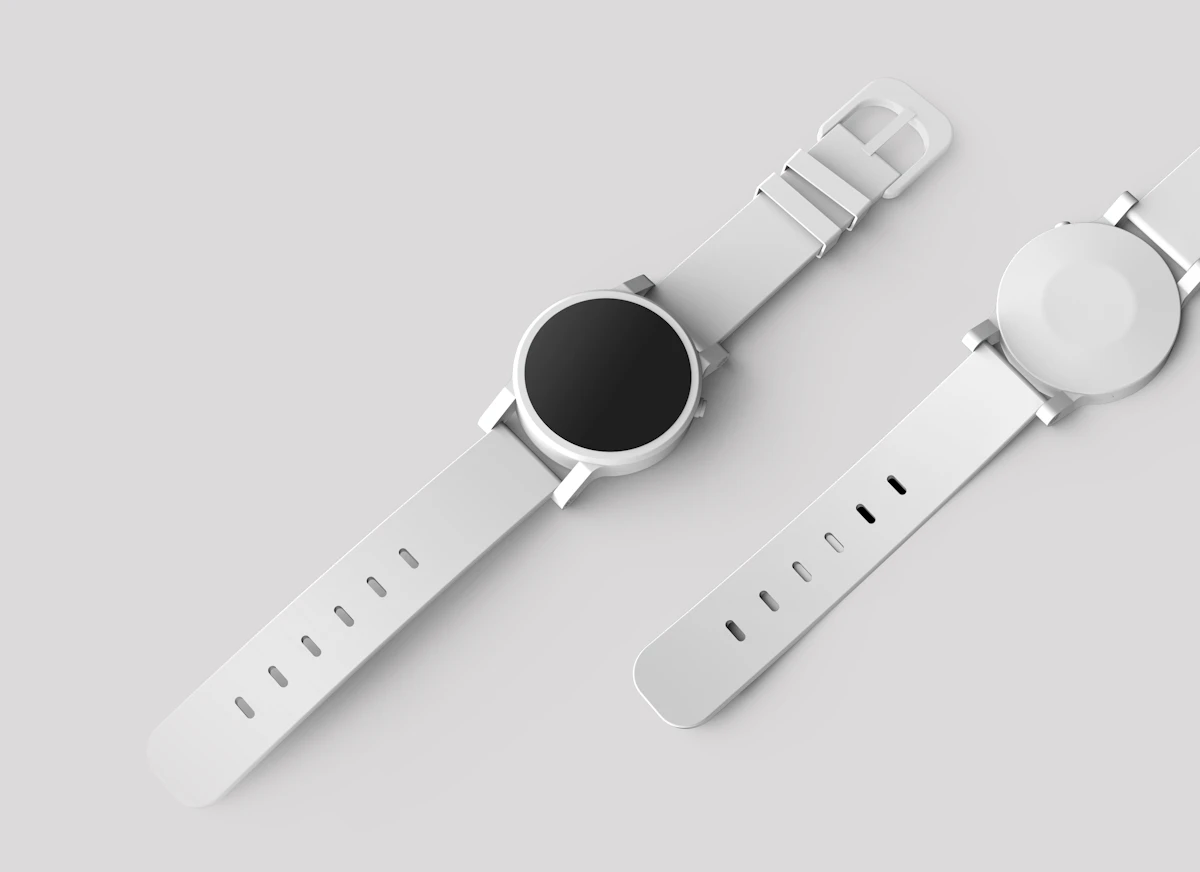
Choose a Slim Fitness Band if you want lightweight 24/7 sleep tracking, step counting, and 10–14 days of battery life under $60. Choose a Multisport GPS Watch (with Dual-Band L1+L5 GNSS and 2-week battery) if you are a runner, cyclist, or hiker focused on training recovery and HRV. Choose a Full Ecosystem Smartwatch (Apple Watch / Wear OS) if you prioritize voice replies, NFC contactless payments, LTE cellular calls, and FDA-cleared ECG alerts.
The wearable tech market has split into three distinct categories: lightweight fitness trackers, rugged endurance sports watches, and full-featured smartwatches that act as an extension of your smartphone. Knowing which biometric sensors and battery trade-offs actually matter prevents you from overpaying for features you will never use.
1. The 3 Main Wearable Categories Compared
| Wearable Type | Typical Battery Life | Navigation & GPS | Smart & App Features | Best Suited For |
|---|---|---|---|---|
| Fitness Band / Tracker | 7 to 14 Days | Connected GPS (via phone) or basic single-band | Notifications, alarms, sleep stages | 24/7 comfort, sleep tracking, budget shoppers |
| Full Smartwatch (watchOS / Wear OS) | 1 to 3 Days | High-precision GPS + turn-by-turn maps | App store, NFC Wallet, voice calls, ECG | Everyday productivity & deep phone integration |
| Multisport / Adventure Watch | 10 to 30+ Days | Dual-Band (L1+L5) Multi-GNSS + offline topo maps | Training load, HRV status, recovery coach | Runners, triathletes, hikers, and outdoor athletes |

2. Understanding Health & Biometric Sensors
- Multi-Path Optical PPG (Heart Rate & HRV): Flashes green and infrared LEDs into the capillaries of your wrist to measure blood volume changes. Higher-end watches use 8-channel arrays to maintain accuracy during high-intensity interval training (HIIT) and calculate overnight Heart Rate Variability (HRV) to gauge nervous system recovery.
- Single-Lead ECG (Electrocardiogram): By touching the metal crown or bezel with your opposite finger for 30 seconds, the watch completes an electrical circuit across your heart to check for signs of Atrial Fibrillation (AFib).
- Dual-Frequency (L1 + L5) GPS: Standard single-band GPS often bounces off tall city buildings or dense tree cover. Dual-band GPS locks onto two satellite frequencies simultaneously for pinpoint pace and distance tracking.
- Wrist Skin Temperature & SpO2: Tracks overnight baseline temperature shifts and blood oxygen saturation to spot early signs of illness or altitude acclimation.
3. Durability, Display & Water Resistance Ratings
- 5ATM (50m) vs. IP68 Water Resistance: If you plan to swim laps or shower with your wearable, verify a 5ATM or 10ATM pressure rating rather than basic IP67/IP68 splash resistance.
- Sapphire Crystal + Titanium Bezel: Watches sit exposed on your wrist and bump into doorframes constantly; sapphire glass resists scratches far better than standard aluminosilicate glass.
- 1,500 to 3,000 Nits Peak Brightness: Ensures you can read your pace and heart rate zones effortlessly under direct midday sunlight.